
HIPAA Breach Response & Documentation System
Most therapists have policies.
Very few have a clear, defensible process for what to do when something actually goes wrong.
This is the system that fills that gap.
When Something Goes Wrong
Most therapists do not have a clear process for handling a potential breach.
They hesitate, try to figure it out as they go, and document after the fact. That is where things start to break down.
HIPAA breach response is not just about reacting. It is about what you can demonstrate afterward.
When something goes wrong, most providers are left trying to figure out whether it actually rises to the level of a breach and what they are supposed to do next. If you want a clear breakdown of how to assess a situation and determine your next steps, you can read:
What to Do If You Think You Violated HIPAA
What HIPAA Requires
Under the HIPAA Breach Notification Rule, providers are expected to assess risk, determine whether a breach occurred, complete required notifications, and maintain documentation that supports every decision.
What gets reviewed is not intention. It is what was done, when it was done, and how it was documented.
Breach response and documentation are routinely reviewed in OCR investigations and licensing board complaints. Incomplete or delayed documentation can escalate a situation that may have otherwise been manageable.
For reporting requirements and timelines, refer to the HHS breach reporting guidance.

A breach response system is one part of a protected therapy practice. It works alongside your HIPAA policies, Security Risk Analysis, privacy procedures, and ongoing compliance systems.
Build a Fully Protected, HIPAA-Compliant Therapy Practice
A breach response system is only one part of a fully protected, HIPAA-compliant therapy practice.
Most providers also need documented HIPAA policies, a completed Security Risk Analysis, and ongoing compliance monitoring systems to ensure their practice is secure, audit-ready, and legally protected.
This system works alongside those components to support how incidents are assessed, documented, and defended if they are ever reviewed.
Most therapy practices require a complete compliance system, not just individual tools.
This System
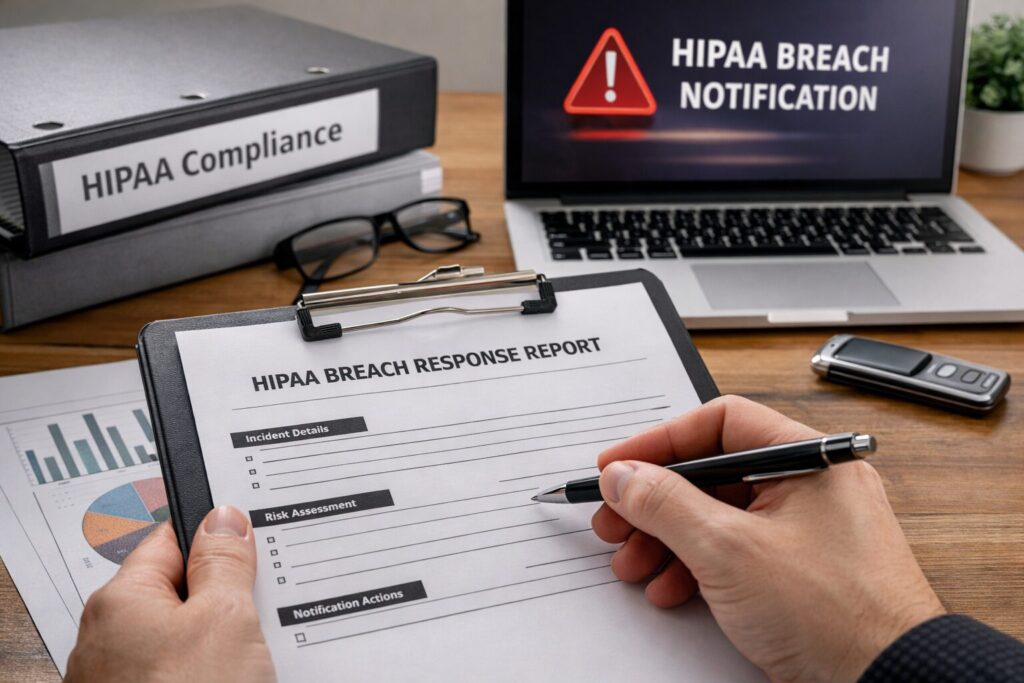
This system gives you a clear, structured way to manage a potential HIPAA breach from initial discovery through final determination, including how to assess, document, and support your decisions if they are ever reviewed.
It is designed to be used in real time when something happens. You are not guessing. You are following a process.
This process is aligned with the federal Breach Notification Rule and related guidance from HHS.

What You Get
A clear, step-by-step process for responding to a potential breach
A structured way to complete a HIPAA-compliant risk assessment
Built-in documentation to support every action and decision
Defined accountability so nothing is missed or delayed
A system that supports your response if it is ever reviewed
Each component is designed to create a clear, defensible record of how the situation was handled from initial discovery through final determination.
Who This Is For
This is designed for mental health providers who want a clear, usable response process. It works for solo practices, group practices, and clinicians who already have policies but no structured way to respond when something actually happens.
What This Is Not
This is not a full HIPAA compliance program.
It is the part most practices are missing. A clear, usable process for what to do when an incident occurs.
This system is priced below its full value to make it accessible as a standalone compliance tool.
Most providers do not have a structured breach response process in place. This is designed to close that gap without requiring a full compliance rebuild.
This system is designed as a professional compliance tool within a broader audit-ready framework.
Investment
HIPAA Breach Response & Documentation System
Value: $1,800
Regular Price: $497
Limited Price: $397
One-time purchase. Customized with your business name. Delivered within 3–5 business days.
This is a professional compliance system designed for real-world use, not a basic template or checklist.
If You Do Not Have This
If you do not have a clear process for handling a breach, you are relying on memory and assumptions when it matters most.
This gives you a way to respond, document, and support every decision you make.
You are still responsible for implementing appropriate safeguards under the HIPAA Security Rule.
Common HIPAA Breach Questions
Accidentally emailed PHI to the wrong person. Is that a HIPAA breach?
Possibly.
It depends on what was sent, who received it, and whether there is a low probability the information was compromised. You need to assess and document the situation to determine next steps.
Do I have to report a HIPAA breach as a therapist?
Sometimes.
Reporting depends on the outcome of your breach assessment. Some incidents require notification to the client and reporting to HHS, while others do not, but all require documentation.
How do I know if something counts as a HIPAA breach?
Not every mistake is a breach.
You are required to evaluate the situation using specific risk factors to determine whether the information was likely compromised.
What are the first steps after a possible HIPAA breach?
Start documenting and assessing immediately.
Delays and incomplete documentation are common issues. You need a clear process to guide what to do and how to record your decisions.
Do I need this if I already have HIPAA policies?
Yes.
Policies outline requirements but do not guide real-time response. This provides a step-by-step process for handling and documenting an incident.
Does this cover state-specific HIPAA requirements?
No.
This is based on federal HIPAA standards. You may still have additional state or licensing requirements that apply to your practice.
How long do I have to report a HIPAA breach?
Up to 60 days from discovery.
The clock starts when the incident is discovered, not when it occurred. Larger breaches have additional reporting requirements.
What is considered “unsecured PHI” under HIPAA?
PHI that is not encrypted or otherwise made unreadable.
If the information can be accessed or viewed by an unauthorized person, it is generally considered unsecured.
What needs to be included in a HIPAA breach notification?
A description of what happened, what information was involved, and what actions are being taken.
You also need to provide steps the individual can take and a way to contact your practice for more information.
Do I need to document an incident even if it is not a breach?
Yes.
You still need documentation showing how you assessed the situation and why you determined it was not a breach.
Is there a required format for documenting a HIPAA breach?
No specific format is required.
However, your documentation must clearly show what happened, how it was assessed, and how decisions were made.