
AI + HIPAA: Resources Hub
& Next Steps
What Therapists Need to Understand About Access, Risk, and Compliance
Use these training resources to evaluate AI tools, understand access and data-flow risk, and begin documenting the choices you make in your practice.
This page includes the exact tools and reference guides mentioned in the training.
Use these to evaluate your current setup, identify risk areas, and begin building a compliance system you can stand behind.

Progress Over Perfection
You don’t need to have everything figured out to start using these tools.
Most of the risk I see in practice doesn’t come from one decision.
It comes from not having a clear way to evaluate and document what you’re doing over time.
Start by understanding how your tools are set up.
Look at access, data flow, and what each system can actually reach.
Then build from there.
Compliance isn’t about getting it perfect all at once.
It’s about being able to show what you’re doing, why you made those decisions, and how you’re managing it over time.
Watch the Full AI + HIPAA Training
This 90-minute AI + HIPAA training was hosted by Kym Tolson and presented by Samantha Schalk, with a focus on AI-related HIPAA risk, access considerations, and compliance decision-making for therapists and mental health practices.
The session covered:
evaluating AI tools through a HIPAA lens
access, exposure, and data-flow considerations
Google Workspace and AI-related configuration concerns
AI agents and browser extension risks
documentation, defensibility, and Security Risk Analysis connections
practical decision-making frameworks for therapists
The resources below were referenced throughout the training and are provided here for continued learning and implementation.
Hosted by Kym Tolson, LCSW | Clinical AI Club & TheraAI Hub
Guest Expert: Samantha Schalk, LMSW | Guardian Clinical Essentials™
AI + HIPAA: What Therapists Need to Understand About Risk, Access, and Compliance
AI + HIPAA conversations often focus too heavily on the tool itself instead of the bigger compliance picture. What matters most is understanding access, data flow, configuration, documentation, and how information moves throughout your practice. This article breaks down the core concepts therapists need to evaluate AI-related risk more clearly and make more informed, defensible decisions over time.
The Free Downloads
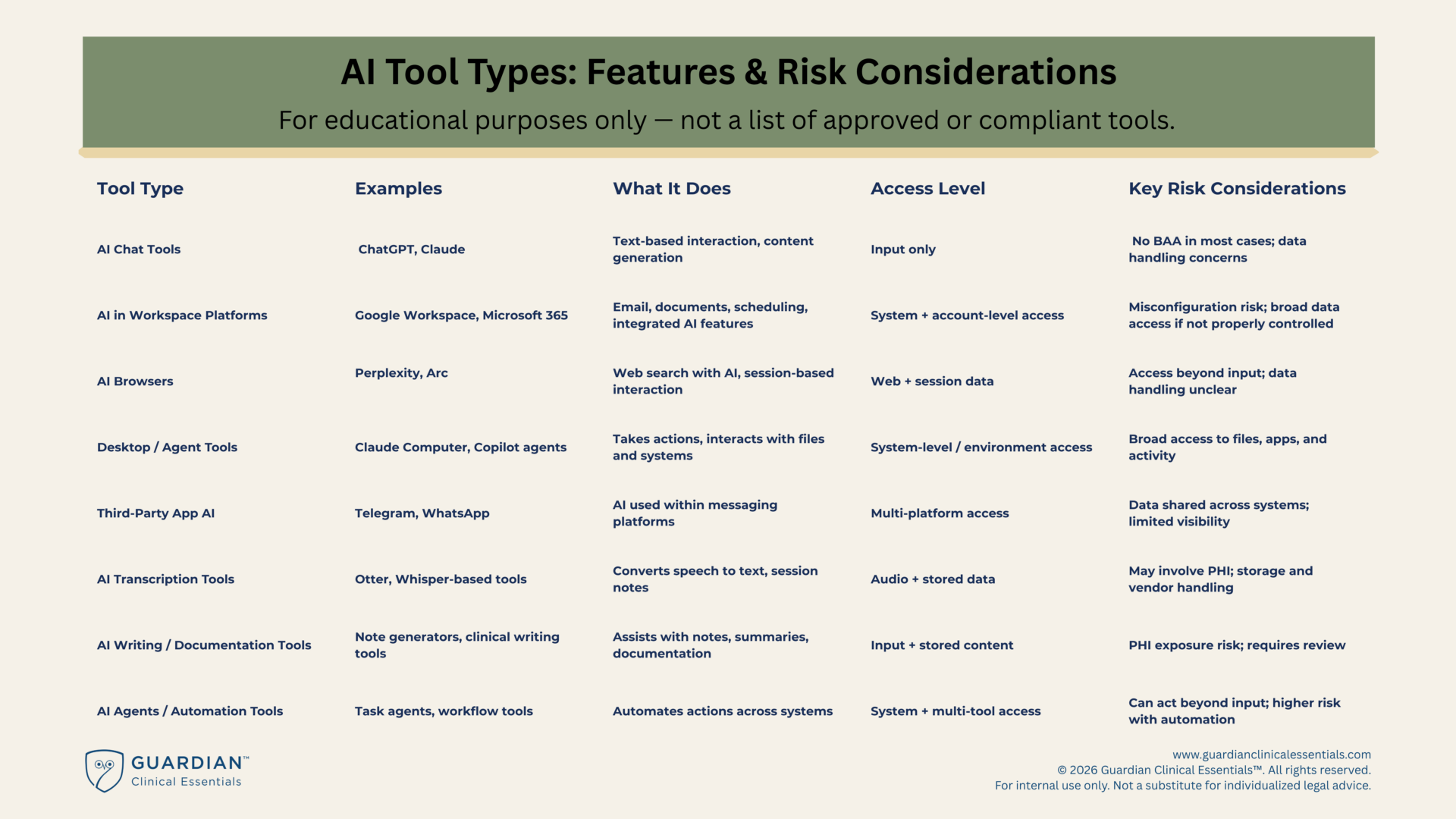
✅ AI Tool Types: Features & Risk Considerations
Breaks down common categories of AI tools and how they differ in access, functionality, and risk.
Helps you understand why different types of tools carry different levels of exposure based on what they can access, how they interact with data, and where risk actually exists.
This is not a list of approved tools. It’s a way to understand the landscape.
✅ Should I Use This AI Tool? A Simple Decision Framework for HIPAA Risk
A step-by-step decision tool to help you evaluate whether and how an AI tool can be used in your practice.
Walks through key questions around PHI, BAA requirements, access level, data handling, and your own use of the tool so you can make informed, defensible decisions.
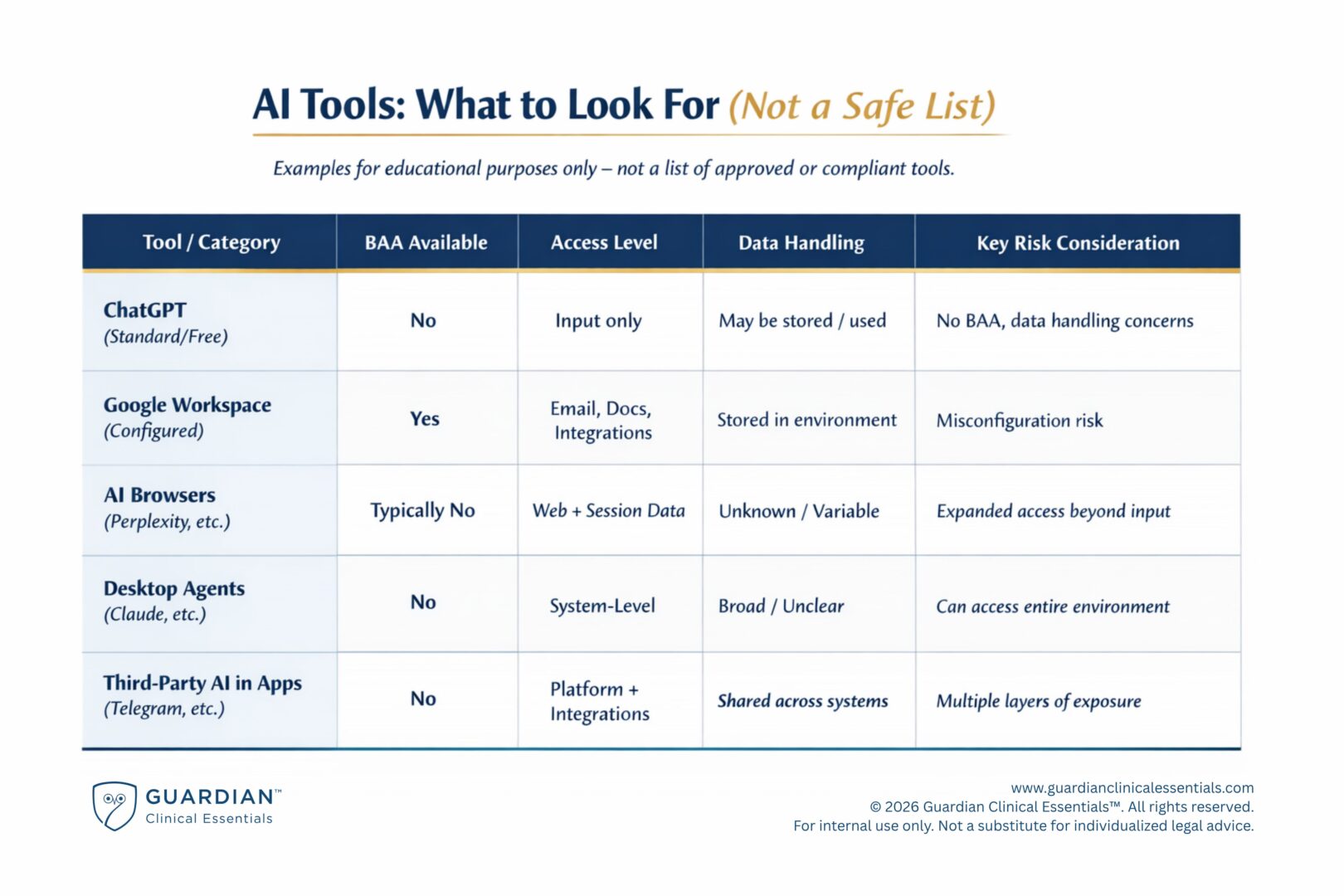
✅ AI Tools: What to Look For (Not a Safe List)
Shows real examples of commonly used tools and how to think about them in terms of BAA availability, access level, and data handling.
Reinforces that there is no universal “safe list” and that risk depends on configuration, access, and use.
✅ Google Workspace Configuration Guide
A structured, step-by-step system for configuring Google Workspace with controlled access, defined data flow, and appropriate security protections.
Includes two versions based on how your practice collects information.
Using Google Forms for Client Intake
Use this if you collect client information through a website form or intake link.
No Google Forms (Internal Use Only)
Use this if all information stays internal and no client data is collected through Google Workspace.
✅ Key Takeaways
A concise summary of the core concepts from the training, including how to evaluate AI tools, where risk actually comes from, and what your responsibility is as the provider.
Designed to reinforce the shift from focusing on the tool itself to understanding access, data flow, and control.
✅ Additional AI Resource
Kym Tolson has also created a helpful resource with practical AI prompt examples designed specifically for therapists exploring AI tools in their workflow.
100 AI Prompts for Therapists

What to Do Next
You’ve reviewed the tools. Now step back and look at how this fits into your overall compliance.
AI is not a separate issue.
It connects to your systems, your access controls, and how information moves through your practice.
Most providers don’t run into problems because of one tool.
It’s because there isn’t a clear, documented way to evaluate and manage risk across everything they’re using.
Start Here
If you’re not sure where to begin, start with your Security Risk Analysis.
That’s where you:
Identify where risk exists
Document what is in place
Create a structure for managing it over time
Not Ready for a Full Review Yet?
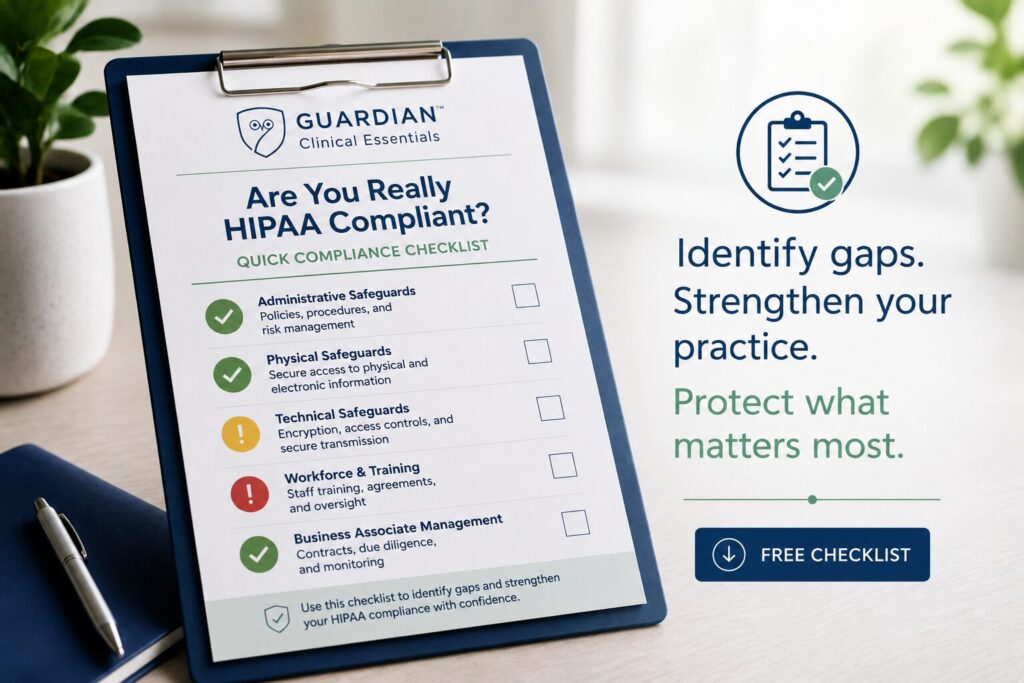
Start with a quick check of your current setup.
✔ See what you already have in place
✔ Identify what’s missing
✔ Get a clearer picture of your compliance gaps
Continue Exploring
Articles:
- Is AI HIPAA Compliant for Therapists?
- Can Therapists Use ChatGPT for Progress Notes?
- Does a Business Associate Agreement Make AI HIPAA Compliant?
- What AI Risks Belong in a HIPAA Security Risk Analysis?
- Can Therapists Paste Client Information Into AI Tools?
- What Should an AI Policy Include for a Therapy Practice?
- Can Group Practices Allow Staff to Use AI Documentation Tools?
- Are AI Therapy Note Tools Safer Than Recording Sessions?
- What Happens to Client Information After AI Processes It?
- Do You Need Client Consent to Use AI?
- Building AI for Therapy Practices: Behind the Scenes with Uriah Guilford
- Colorado’s New AI Law for Therapists: What Mental Health Practices Need to Change Now